
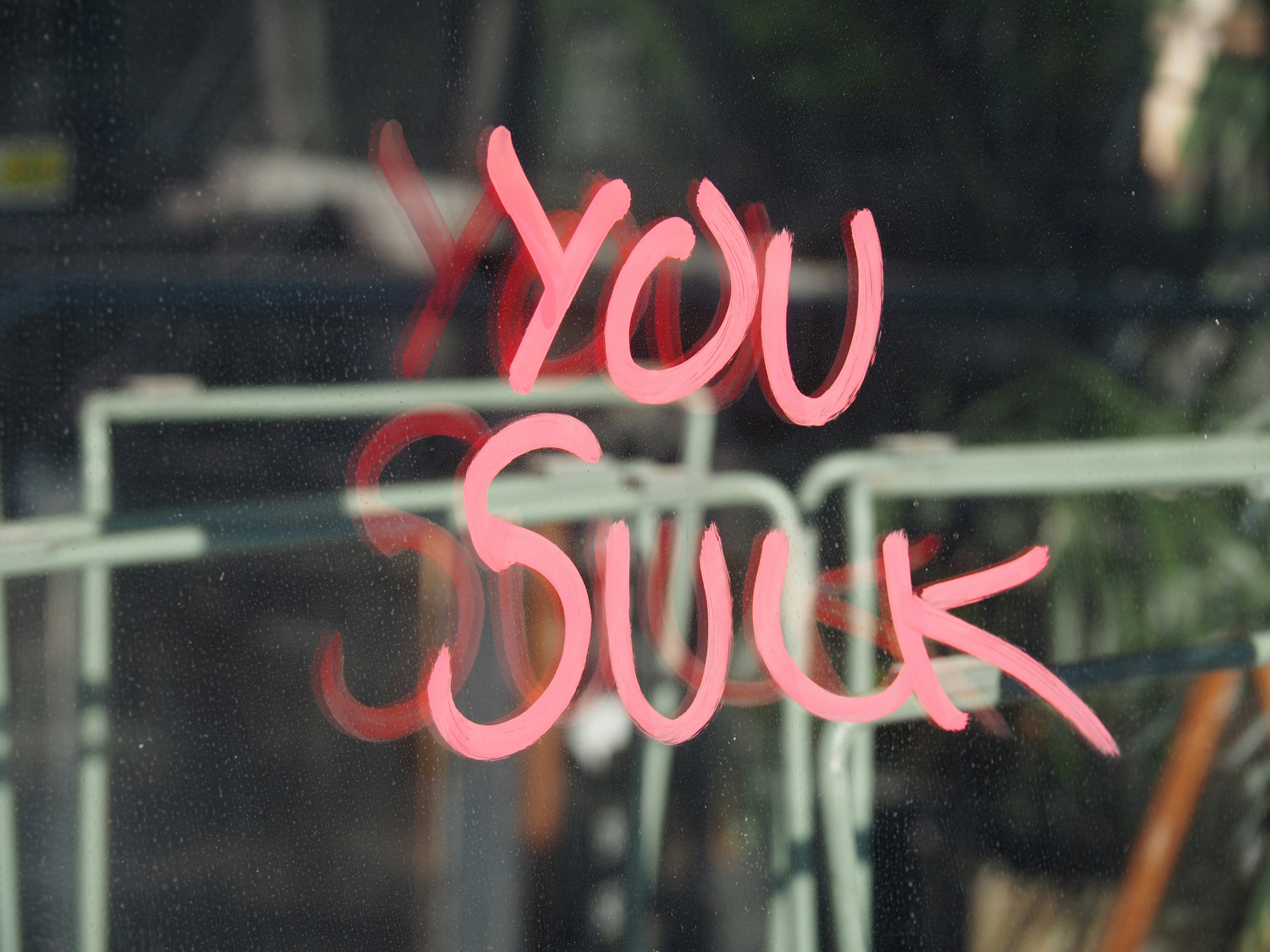
Writing prompts are supposed to make you want to write. Most of them make you want to close the tab.
You’ve seen the lists. “Write about a time you felt grateful.” “Describe your favorite season.” “Imagine you’re on a desert island.” These are the writing equivalent of a dentist asking you to describe your pain on a scale of one to ten. Technically functional. Completely uninspiring.
Here’s the thing: prompts actually work. There’s real research behind why a good prompt can bypass your inner critic, dissolve the blank page, and get words flowing in under a minute. The problem isn’t the concept. The problem is that most prompts are generic homework disguised as creative exercises.
This guide is about writing prompts that earn their place. You’ll learn what separates a prompt that makes you roll your eyes from one that makes you grab a pen. You’ll get a practical framework for using prompts (even ones you hate). You’ll walk away with 15 prompts that are specific, a little absurd, and actually fun to respond to. And if you’ve never written for fun in your life, you’re exactly who this is for.
What Makes a Writing Prompt Actually Good?
The Specificity Principle
A good writing prompt gives you a specific starting point. A bad one gives you a blank page with a topic label stapled to it.
Compare these two prompts:
Generic: “Write about an animal.”
Specific: “Write a strongly worded complaint letter from a pigeon who keeps getting shooed off park benches.”
The first prompt does almost nothing for you. You still have to decide which animal, what situation, what tone, what format. That’s four decisions before you write a single word, and every decision is a chance for your inner critic to show up and start editing before you’ve started writing.
The second prompt hands you a character (pigeon), a situation (bench eviction), a format (complaint letter), and a tone (indignant). Your only job is to write. The decisions are already made.
This is the specificity principle: the more specific the constraint, the less room your brain has to overthink. Dr. Seuss wrote Green Eggs and Ham using only 50 unique words because his editor bet him he couldn’t. The constraint didn’t limit his creativity. It focused it.
These are the kinds of creative writing prompts that actually make you pick up a pen, and the absurd writing prompts tend to work best.
Why Absurd Beats Serious
Serious prompts (“Write about a defining moment in your life”) activate your inner editor immediately. The stakes feel real. The output feels like it matters. And when it matters, perfectionism shows up.
Absurd prompts (“Write a Yelp review for the sun”) do something different. They signal to your brain: this is play. Nobody’s grading a Yelp review for a celestial object. There’s no “right” answer, no bar to clear, no standard to meet. The absurdity gives you permission to write badly, which is the fastest way to write at all.
The best writing prompts sit in a sweet spot: specific enough to remove the blank page, absurd enough to remove the pressure.
Boring Prompt vs. Prompt That Doesn’t Suck
Boring: “Write about your morning routine.”
Better: “Write a nature documentary narration of yourself making coffee at 6 AM.”
Boring: “Describe a place you love.”
Better: “Write a real estate listing for your childhood bedroom. Be honest about the flaws.”
Boring: “Write about food.”
Better: “You’re a food critic reviewing the last thing you microwaved. Be brutal.”
Why Writing Prompts Work (Even When You Think They Won’t)
The Blank Page Problem
The hardest part of writing isn’t writing. It’s deciding what to write about.
A blank page is an infinite decision space. You could write about anything, which means you have to choose something, which means you have to evaluate options, which means your brain starts asking unhelpful questions: “Is this interesting enough? Is this original? Am I even qualified to write about this?”
Prompts collapse that infinite space into a single starting point. You don’t decide what to write. The prompt decides. All you do is respond. And the moment the decision is removed, the blank page loses its power.
This isn’t just a clever workaround. James Pennebaker, a psychologist at the University of Texas at Austin, has spent decades studying what happens when people write about their thoughts and feelings. In his foundational research, participants wrote for 15 to 20 minutes across three consecutive days, exploring whatever came to mind without worrying about grammar or structure. They weren’t writers. They were college students given a prompt and a timer.
The results were striking. Participants who wrote about meaningful topics showed improvements in physical and mental health. Over 400 follow-up studies have explored the effect. The takeaway relevant to prompts: you don’t need to be a writer to benefit from writing. You just need a starting point and permission to be messy.
Prompts as Permission Slips
Anne Lamott calls first drafts “shitty first drafts” in her book Bird by Bird. Her point: every writer produces garbage on the first pass. The difference between someone who writes and someone who doesn’t isn’t talent. It’s willingness to produce the garbage.
A good prompt functions as a permission slip. When the prompt is “Write a passive-aggressive note from your houseplant,” the output is inherently silly. There’s no expectation of quality. You can write the worst thing imaginable and it still fulfills the prompt. That’s the unlock.
If you’ve ever thought “I’m not really a writer,” Pennebaker’s research has news for you. His participants weren’t writers either. They just wrote for 15 minutes. That was enough.
How to Actually Use a Writing Prompt (A Framework That Works)
The 10-Minute Rule
Using a writing prompt isn’t complicated, but nobody actually explains the process. So here it is.
Step one: Pick a prompt. Any prompt. If you have a daily prompt app or email, use that. If you’re choosing from a list, go with the first one that makes you react, even if the reaction is “that’s dumb.” Especially if the reaction is “that’s dumb.”
Step two: Set a timer for 10 minutes. Not 30. Not an hour. Ten minutes. You can do almost anything for 10 minutes, and the constraint creates urgency that overrides your inner editor.
Step three: Write without stopping. Don’t reread. Don’t fix typos. Don’t delete sentences. If you run out of things to say, write “I have nothing to say” until something else shows up. It will.
Step four: When the timer goes off, stop. You’re done. You don’t need to finish, polish, or reread. You wrote. That’s the whole point.
My own process is embarrassingly simple. I see the prompt, I set a timer, and I write whatever comes out. Some days it’s 200 words of nonsense. Some days I accidentally write 600 words and don’t want to stop. The timer isn’t a ceiling. It’s a safety net. It tells your brain: this doesn’t have to take all day.
What to Do When You Hate the Prompt
You will hate some prompts. That’s fine. Hating the prompt is actually useful, because it gives you something to write about: why you hate it.
“This prompt is stupid. Who wants to write about a pigeon? I don’t care about pigeons. Although, actually, pigeons are kind of bold. They walk right up to you. No fear. Maybe the pigeon is the bravest animal in any city…”
That’s 40 words. Written in the voice of someone annoyed by a prompt. And somewhere in the middle of the complaint, the writing started happening.
You don’t need to love the prompt. You need to respond to it. Arguing with it counts.
15 Writing Prompts That Prove the Point
These are fun writing exercises disguised as weird questions. Each one is specific, a little strange, and designed to get you writing in under a minute. Pick one. Set your timer. See what happens.
Absurd (for when you need to laugh before you write)
- Write a Yelp review for the sun.
- You’re a GPS that’s completely lost. Narrate the next 5 minutes of directions.
- Write a resignation letter from your left sock.
- A squirrel has stolen your lunch. Write the police report.
- You’ve been hired to write the fortune cookie messages for a company going through layoffs.
Personal (for when you want to write something real, but low-stakes)
- Write a performance review for your worst habit.
- Describe the last meal you cooked as if you were a Michelin restaurant critic.
- Write the opening paragraph of a memoir you’ll never publish.
- Your phone’s screen time report just dropped. Write your response as a formal apology.
- Write a letter to your 14-year-old self, but only about food.
Dark and Twisty (for when you want to go somewhere interesting)
- Your houseplant has been keeping a diary. What’s in it?
- You just found out your dog has been rating you out of 10 every day. Today you got a 4. Why?
- Write the last text message sent before a very minor apocalypse (all the world’s socks disappear).
- You’re a ghost, but a really bad one. You keep haunting the wrong house.
- Write the internal monologue of the last thing you threw in the trash.
Here’s what a response to Prompt #1 looks like. No editing. No second draft. Just 60 seconds of writing:
‘One star. Shows up uninvited every morning. Way too bright. No dimmer switch. Has been doing this for 4.6 billion years and still hasn’t learned boundaries. Causes sunburn, makes you squint, and has the audacity to disappear for months in Scandinavia while blasting Australia nonstop. Somehow has a 5-star average. Suspicious.’
That example took about 60 seconds. It’s not good writing. It’s not supposed to be. But it’s writing, and it’s more than what a blank page produces.
Writing Prompts as a Daily Habit (Not a One-Time Exercise)
The 66-Day Myth That’s Actually True
A single prompt might get you writing today. Building a daily writing habit is what gets you writing in six months.
You’ve probably heard it takes 21 days to form a habit. That number comes from a plastic surgeon’s anecdotal observations in the 1960s about how long patients took to adjust to new appearances. It has nothing to do with behavioral science.
The actual research tells a different story. A 2009 study by Phillippa Lally and her team at University College London tracked 96 people building new daily habits. The average time to reach automaticity (doing the behavior without conscious effort) was 66 days. But the range was enormous: 18 days to 254 days, depending on the complexity of the habit.
Here’s the part that matters for daily writing: simpler behaviors formed faster. Drinking a glass of water after breakfast habituated in weeks. Complex exercise routines took months. A daily writing response of 50 to 200 words? That’s closer to the simple end of the spectrum.
And the most encouraging finding: missing one day did not materially affect the habit formation process. Your streak doesn’t shatter if you skip a Tuesday. You just pick it up again on Wednesday.
Why 50 Words Is Enough
The biggest mistake people make with writing habits is setting the bar too high. “I’ll write 1,000 words a day” sounds ambitious. It’s also a setup for failure, because the first day you don’t hit 1,000, you feel like you’ve broken the system.
Fifty words is enough. That’s roughly the length of this paragraph. You can write 50 words in under two minutes. It’s so small that talking yourself out of it feels sillier than just doing it.
The point isn’t the word count. The point is showing up. A 50-word day and a 500-word day both count as “I wrote today.” Over 30 days of 50-word responses, you’ve written at least 1,500 words. Over 66 days, you’ve crossed 3,300. You didn’t set out to write 3,300 words. You just responded to some weird writing prompts every day, and the words accumulated underneath you.
Writing Prompts for People Who Think Prompts Are Stupid
If you read those 15 prompts above and thought “this isn’t for me,” keep reading. This section is specifically for you.
The most common reason people dismiss writing prompts is that they don’t see themselves as writers. Prompts feel like creative writing class, and creative writing class was the place where someone read their poem aloud and everyone had to say something nice. That experience has understandably put a lot of people off writing for fun.
But here’s what Pennebaker’s research actually shows: the people in his studies who benefited from writing weren’t writers. They were regular people, mostly college students, handed a prompt and given 15 minutes. No one graded them. No one read their work. The writing was for them, and it still helped.
You don’t have to call yourself a writer to respond to a prompt. You don’t have to share what you wrote. You don’t have to reread it, save it, or think about it again. The act of putting words on a page (or a screen) for a few minutes is the whole thing.
I’ve had people tell me they haven’t written anything since college. Then I hand them a prompt like ‘Write a performance review for your worst habit’ and their eyes light up. Everyone has opinions about their own flaws. That’s not creative writing. That’s just talking, except on paper.
And for the record: if you’ve ever written a text, an email, a social media caption, a grocery list with commentary, or a passive-aggressive note for your roommate, you’ve already done something harder than responding to a writing prompt. You just didn’t call it writing.
The transformation doesn’t announce itself. You sit down to write something stupid in response to a stupid prompt. You do it again the next day. And the next. Somewhere around day 20, you realize you’re reaching for the prompt before your morning coffee, not because you’re disciplined, but because your brain wants to do it. That’s the habit forming. You came to write badly. You accidentally became someone who writes.
The right writing prompt doesn’t need to be profound. It needs to be specific enough to give you a starting point, weird enough to shut up your inner critic, and low-stakes enough that you can write the worst thing imaginable and still count it as a win.
That’s the whole philosophy. Find prompts that feel like play, not homework. Use them daily, even if “daily” means 50 words between sips of coffee. Skip a day and pick it back up without guilt. The research backs this up, and more importantly, the experience of doing it backs it up.
If writing prompts still feel too structured, start smaller. Write one sentence about the last thing that annoyed you. That’s a draft. That counts.
Ready to try? BadDrafts sends you one absurd prompt every day and tracks your streak. No word counts. No grading. Just a weird question and a timer.