
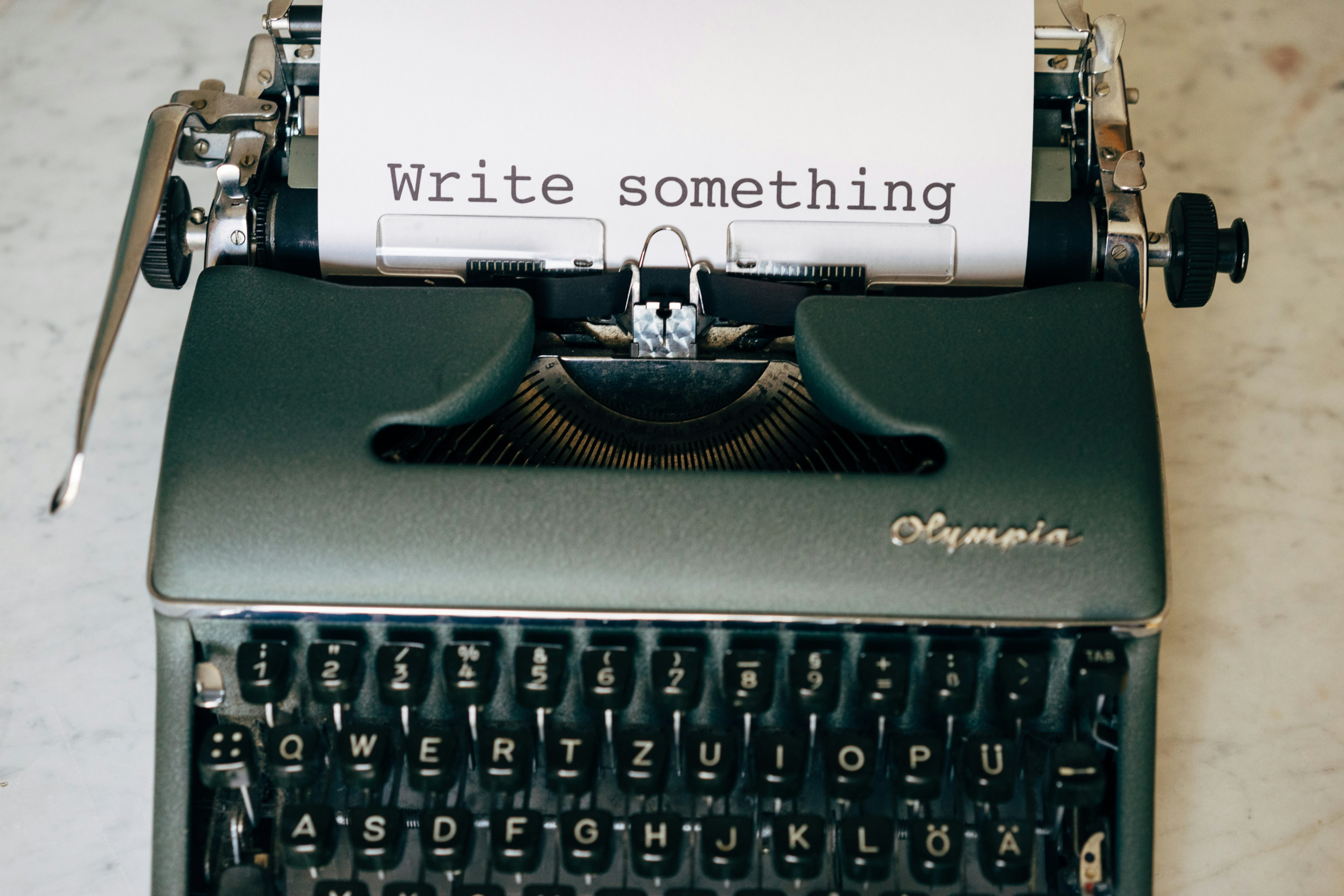
Writing prompts for beginners are supposed to help you start writing. So why do most of them feel like a homework assignment from a teacher you never signed up for?
“Write about a time you overcame adversity.” “Describe your happiest memory.” “Reflect on a meaningful relationship.”
Cool. Now you’re staring at the page with the same blank paralysis you had before, except now you also feel vaguely guilty about not having a meaningful enough life to describe.
Here’s the thing: the problem was never that you lacked prompts. The internet has millions. The problem is that most prompts take themselves too seriously, and that seriousness is exactly what makes beginners freeze up.
This article is full of prompts that don’t suck, the kind that are actually fun. They’re weird. They’re specific. They’re the kind of prompts that make you laugh first and write second. You’ll also get a look at why prompts work in the first place, what to do after you write (spoiler: not much), and how one prompt a day can quietly turn into a writing habit.
Why Most Writing Prompts Feel Like Homework
Most writing prompts are built for people who already think of themselves as writers. They assume you have a novel in progress, a journaling practice, or at least some confidence that what you write will be worth reading.
If you’re a beginner, that’s a tall order. You’re not here because you’re stuck on chapter seven. You’re here because you want to try writing and the blank page feels like it’s judging you.
The typical prompt makes this worse. “Write about your greatest fear.” “Describe a pivotal moment in your life.” These sound reasonable until you realize they’re asking you to be vulnerable, introspective, and articulate all at once, before you’ve written a single word.
Research on perfectionism and procrastination shows that high-stakes framing triggers avoidance. When the task feels serious, the internal pressure to do it well can stop you from doing it at all. That’s not a discipline problem. That’s a design problem. The prompt itself is creating the block.
The fix isn’t more prompts. It’s different prompts. Ones that are low-stakes enough that your inner critic doesn’t bother showing up. Nobody’s inner critic has strong opinions about a Yelp review for the moon.
Why Prompts Actually Work (Even the Weird Ones)
Constraints Beat the Blank Page
A blank page asks an impossible question: “What do you want to say?” That question has infinite answers, and infinite answers create paralysis.
A prompt narrows the field. Instead of “write something,” you get “write a strongly worded letter to gravity.” Suddenly you have a subject, a tone, and a format. Your brain doesn’t have to generate an idea from nothing. It just has to respond to one.
Research on constraints and creativity supports this. Studies on creative problem-solving consistently find that people produce more original ideas when working within defined boundaries than when given total freedom. Limitations focus attention and force unexpected connections.
For beginners, this matters even more. You’re not lacking talent or ideas. You’re overwhelmed by options. A prompt is a funnel. It takes all the possible things you could write and says: write this one weird thing.
Lower Stakes, More Words
The other reason prompts work is that the right prompt makes quality irrelevant.
When your prompt is “Describe your morning routine as narrated by a nature documentary host,” you’re not trying to write something beautiful. You’re trying to write something funny. Or weird. Or entertainingly bad.
That shift matters. Perfectionism is the biggest barrier for beginner writers, and absurd prompts dissolve it by making the task inherently silly. You can’t write a “bad” response to a prompt about your houseplant filing a formal complaint, because the prompt was never serious in the first place.
This is why the best writing prompts for beginners aren’t thoughtful or literary. They’re ridiculous. They give your inner critic nothing to work with.
15 Writing Prompts That Aren’t Homework
These easy writing prompts are grouped by type. Each type works differently, so try at least one from each group and see which one gets your brain moving.
Sentence Starters
These give you the first line. You just keep going.
- “The last thing the robot said before powering down was…”
- “I found a note in my pocket that I definitely didn’t write. It said…”
- “The fortune cookie was oddly specific. It read…”
- “My cat has been acting suspicious ever since…”
Why these work: Sentence starters bypass the blank-page problem entirely. The first line is done. You just have to write the second one.
Scenario Prompts
These give you a situation. You decide what happens.
- Write a Yelp review for the moon. Be fair but honest. 3 stars.
- Your houseplant has filed a formal complaint about your care. Write the complaint.
- You’re a GPS that has given up on the driver. Give directions anyway.
- Write the opening paragraph of your dog’s memoir. Include the dedication page.
Why these work: Scenario prompts hand you a character, a setting, and a conflict. All you do is play.
Constraint Prompts
These add a rule that forces your brain sideways.
- Describe your morning, but you can’t use the letter “e.”
- Write about your best friend using only food metaphors.
- Tell the story of your last vacation in exactly 50 words. Not 49. Not 51.
- Write a love letter to something you own that you’d be embarrassed to admit you love.
Why these work: Constraints make your brain solve a puzzle instead of performing. The constraint does the heavy lifting, and you write while you’re busy following the rule.
Question Prompts
These ask you a question that has no correct answer.
- If your anxiety were a roommate, what would their daily schedule look like?
- What would your pet write in their memoir’s acknowledgments section?
- If you could send a text to yourself at age 14, what would you say? (Keep it under 160 characters.)
Why these work: Question prompts feel conversational. You’re not performing. You’re just answering a weird question, and the writing happens while you think about it.
Not a single one of these creative writing starters asked you to reflect on adversity or describe a meaningful experience. That was intentional. If you’re trying writing exercises for adults that don’t feel like a midterm exam, absurd writing prompts beat earnest ones every time.
What a “Bad” Prompt Response Actually Looks Like
The Prompt
Every writing prompt article gives you prompts. Zero of them show you what writing from a prompt actually looks like. So here’s one.
Prompt: Write a Yelp review for the moon. Be fair but honest. 3 stars.
The Response
“3 stars. Look, the moon is fine. It does its job. Shows up most nights, moves the tides, gives werewolves something to howl at. But let’s talk about consistency. Sometimes it’s full. Sometimes it’s a sliver. Sometimes it just doesn’t show up at all and you’re left in the dark like you did something wrong. The ambiance is solid when it’s working. That weird silvery light it does is genuinely nice, especially near water. But the lack of a regular schedule is frustrating. I can’t plan around this. My neighbor says she finds the waxing and waning ‘romantic.’ My neighbor also burns incense at 6 AM and calls her cat ‘my familiar.’ Make of that what you will. Would I recommend the moon? Reluctantly, yes. It’s free, it’s been around forever, and the alternatives are worse. But I’d love to see some improvements to the reliability situation. Maybe a newsletter.”
Guidance: Replace with your own 100 to 150 word take on this prompt (or a different prompt). The point is to show beginners that prompt responses don’t need to be polished. Your actual voice here would be the strongest version.]
That’s it. That’s what writing from a prompt looks like. It’s not literature. It’s not even good. It’s 150 words that didn’t exist ten minutes ago, and it was fun to write.
That’s the whole point. The response doesn’t need to go anywhere. It doesn’t need a plot, a theme, or a lesson. It just needs to exist.
Now What? What to Do After You Write
You wrote something. It’s weird. It might be terrible. Now what?
Honestly? Nothing. You don’t have to do anything with it.
Most beginner writing advice makes this step way too complicated. Edit it. Revise it. Share it with a critique group. Get feedback. Rewrite. Submit.
No. You just started. The goal right now is reps, not results.
Here are your actual options, and all of them are fine:
Keep it. Throw it in a folder, a journal, or an app. In six months you might read it and laugh, cringe, or discover a sentence you actually like. All three outcomes are good.
Trash it. Seriously. Delete it. The point was the writing, not the product. The words did their job the moment your fingers stopped being frozen.
Try another prompt. If one prompt got your brain moving, ride the wave. Stack two or three in one sitting. The writing muscle builds fastest when you write through the warm-up and into the flow.
Expand it. Sometimes a terrible 150-word prompt response has one good line buried in the mess. That one line is worth more than the three hours you spent not writing. Pull it out and see where it goes.
The biggest mistake beginners make isn’t writing badly. It’s treating every word like it needs to become something. It doesn’t. Some writing is just practice. Some writing is just play.
From One Prompt to a Daily Habit
A single writing prompt is useful. A daily writing prompt is transformative. The difference between “I tried writing once” and “I’m someone who writes” is almost always repetition.
Published habit formation research found that building a new habit takes anywhere from 18 to 254 days depending on complexity, with a median of about 66 days. But writing from a prompt for 10 minutes? That’s on the low end of complexity. You don’t need equipment, a gym membership, or a plan. You need a prompt and 10 minutes.
The Two-Week Turning Point
Two weeks is where it shifts. The first few days feel like pushing a boulder uphill. You sit down, stare at the prompt, and wonder why you’re doing this. By day five or six, the resistance starts to soften. By day fourteen, something weird happens: you start thinking about writing before you sit down. Ideas pop up in the shower, in line at the store, on a walk. Your brain starts treating writing as something it does, not something you’re forcing it to do.
James Pennebaker’s research on expressive writing found that even 15 to 20 minutes of writing can produce measurable psychological benefits. You don’t need an hour. You don’t need a novel. You need a prompt, a timer, and permission to write badly.
Embrace the Suck
Writing prompts don’t have to be homework. The best ones are specific, weird, and just absurd enough that your inner critic doesn’t know what to do with them.
You don’t need 500 prompts. You need one that makes you want to write the second sentence. And then another one tomorrow.
The prompts in this article are designed to get you writing, not to test whether you can write well. Nobody’s grading your Yelp review of the moon. Nobody’s reading your houseplant’s formal complaint unless you want them to.
Start with one prompt. Set a timer for 10 minutes. Write the worst thing you’ve ever written. Then do it again tomorrow.If any of that sounds like your kind of thing, BadDrafts sends you a ridiculous prompt every day and tracks your streak. No pressure. Just daily, terrible writing.