
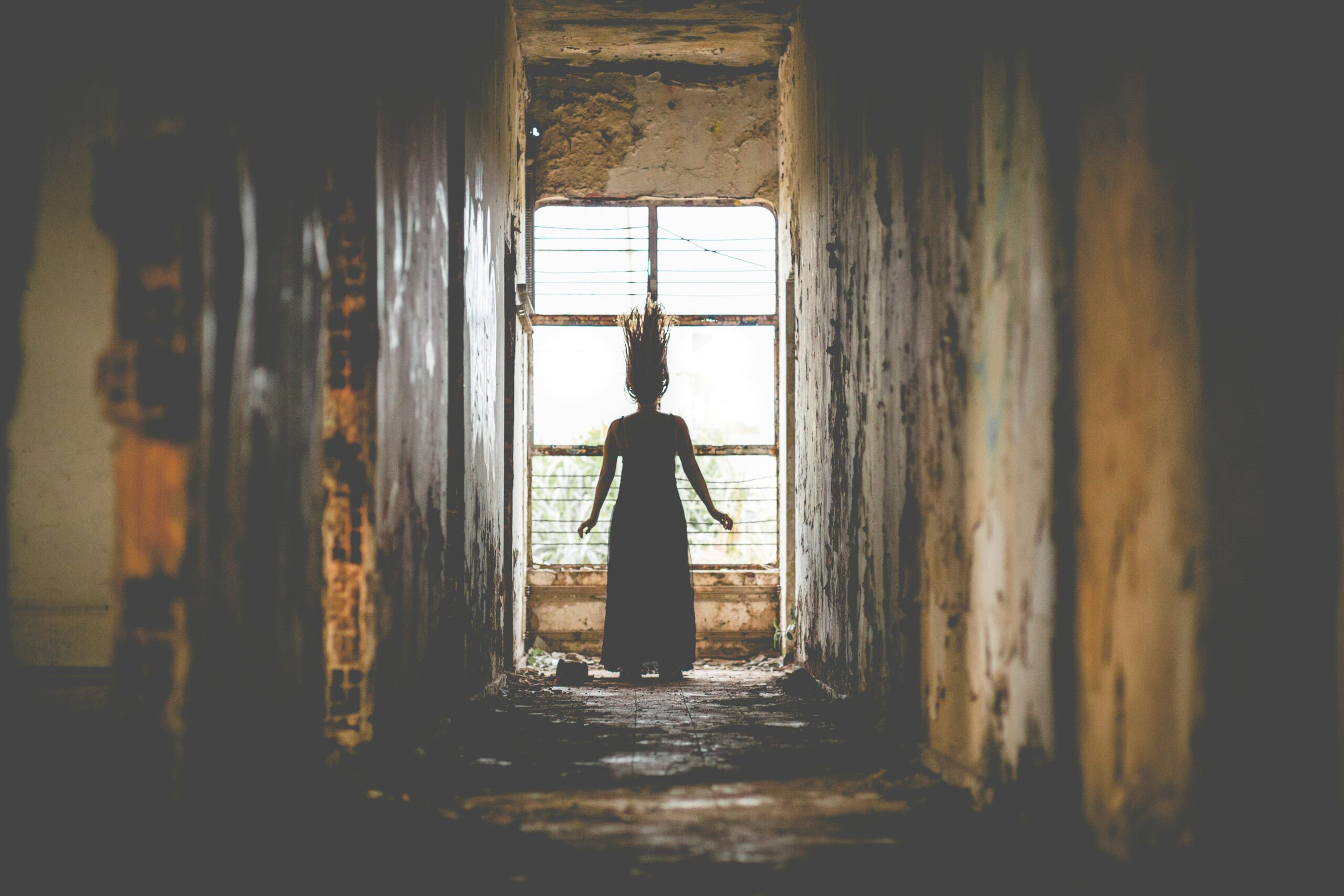
Horror writing prompts are where your inner critic finally shuts up. When the assignment is “write a text message from inside the walls of your house,” nobody’s worried about literary merit. You’re just trying to creep yourself out before you lose your nerve.
That’s the secret most prompt lists won’t tell you: horror is one of the easiest genres to write badly in, and writing badly is how you actually start writing. The genre runs on raw, visceral, messy language. It rewards gut reactions over polished prose. And the prompts you’ll find below are designed to get under your skin, not sit politely on a Pinterest board.
These aren’t PG-13 story starters about haunted houses with “mysterious secrets.” These are 20 prompts organized by horror subgenre, from psychological dread to body horror to cosmic wrongness, each one specific enough to start writing in 30 seconds. You’ll also get an actual example of what a terrible first draft looks like when you write from one of these prompts.
Pick a prompt. Set a timer. Write something that would horrify your mother.
Why Horror Writing Prompts Work (When Nothing Else Does)
Your Brain on Horror
There’s actual science behind why horror gets people writing when inspirational quotes and gratitude journals don’t. A 2021 study published in Personality and Individual Differences found that horror fans showed greater psychological resilience during the COVID-19 pandemic. The researchers’ explanation: frightening fiction acts as a simulation. Your brain practices handling fear, dread, and uncertainty in a space where nothing is actually at stake.
Writing horror, not just consuming it, takes that a step further. You’re not passively watching a character get chased through the woods. You’re building the woods. You’re deciding what’s in them. That act of creation forces your brain into problem-solving mode, which is the opposite of the frozen, blank-page paralysis that kills most writing sessions before they start.
Horror Gives You Permission to Be Messy
Here’s the thing about horror as a genre: it already sounds like a bad draft. Visceral. Choppy. Unhinged. A sentence like “the teeth were growing back wrong” isn’t polished prose, but it’s effective horror. The bar for “good enough” in horror is lower than almost any other genre, which makes it the perfect entry point for anyone who’s been staring at a blank page waiting for the right words.
Good prompts work because they bypass the “what should I write about” problem entirely. Writing prompts that actually work give you a specific, weird starting point. Horror prompts work even better because they add urgency. Something is wrong. Something needs to be written down before it gets worse. That fake urgency tricks your brain into writing before your inner editor can object.
I’ve written some genuinely weird stuff at 2 AM that I’d never show anyone. That’s the point. The dark stuff, the creepy stuff, the stuff that makes you wonder about yourself a little bit. That’s the writing that breaks the seal. Once you’ve written a horror prompt about a sentient microwave that knows your secrets, a blog post about your weekend feels easy.
20 Horror Writing Prompts by Subgenre
Psychological Horror
Psychological horror lives in your head. No monsters, no ghosts, just the slow realization that something is deeply, fundamentally wrong, and it might be you.
- You get a voicemail from yourself. You sound terrified. You’re begging you not to go home tonight.
- Your therapist asks you to describe a recurring dream. As you talk, she starts writing faster and faster, then stops. “That’s not a dream,” she says. “That’s a memory.”
- Everyone in your office receives a company-wide email with a photo attachment. It’s a picture of you, asleep in your bed, taken from inside your closet. The email was sent from your account.
- You find a journal in your handwriting. The last entry, dated tomorrow, reads: “I finally understand why it had to be her.”
Body Horror
Body horror is about the thing you can’t escape because the thing is you. Your own skin, teeth, bones, doing something they were never supposed to do.
- You notice a seam running down the center of your palm. It wasn’t there yesterday. It’s getting deeper.
- Your reflection blinks a half-second after you do. Then it smiles. You didn’t smile.
- After a routine dental cleaning, your dentist calls you back in. The x-rays show a second set of adult teeth growing behind your current ones. They’re pointed.
- You wake up and your shadow is on the wrong side. By noon, it’s ahead of you. By evening, it’s waiting at your front door.
Cosmic and Existential Horror
Cosmic horror is the realization that the universe is bigger, older, and more indifferent than you ever wanted to believe. You’re not the protagonist. You might not even be real.
- Astronomers announce that the stars are going out. Not burning out. Being switched off, one by one, starting from the edges and working inward.
- A frequency is detected broadcasting from inside the Earth’s core. When translated, it’s a countdown. It started at seven billion.
- The ocean recedes a mile from shore overnight. It doesn’t come back. Something is standing where the water used to be, and it’s been standing there for a very long time.
- Scientists discover that human consciousness is a signal. It’s being transmitted. And someone just changed the channel.
Domestic and Everyday Horror
The scariest horror doesn’t happen in a haunted mansion. It happens in your kitchen, your bathroom, your kid’s bedroom. Everyday horror takes something safe and makes it wrong.
- The baby monitor picks up a second voice singing your child a lullaby. You’re the only adult home.
- You come home to find your front door unlocked. Nothing is stolen. But every family photo on the wall has been replaced with an almost-identical version where one person is missing. Nobody else notices.
- Your dog won’t enter the living room anymore. He stands at the threshold, staring at the corner behind the couch, growling softly, for hours.
- Your smart speaker starts answering questions you haven’t asked yet. Its answers are always correct.
- A recipe card falls out of your late grandmother’s cookbook. It’s in her handwriting. The ingredient list includes “one tooth from the youngest child.”
Survival Horror
Survival horror puts you in a box and asks: what would you do? The rules are simple. Get out. Don’t die. The rules are also lies.
- You’re the night security guard at a storage facility. Unit 113 has been padlocked from the inside. Someone is knocking.
- Your car breaks down on a stretch of highway with no cell signal. A tow truck arrives within minutes. The driver knows your name. He knows where you were going. He says you’re not the first.
- You wake up in a hospital bed. The nurse tells you the surgery was a success. You didn’t schedule any surgery. She hands you a mirror and says, “You look so much better now.”
What a Bad Draft Actually Looks Like
Example: The Voicemail Prompt
Here’s prompt #1 again: You get a voicemail from yourself. You sound terrified. You’re begging you not to go home tonight.
And here’s what a terrible first draft of that prompt might look like, written in about four minutes with zero editing:
The voicemail was 47 seconds long. I know because I watched the timer while my own voice told me I was going to die.
“Don’t go home. Please. I know you think I’m crazy but I’m you and I know what’s in the house and it’s not what you think it is. It’s been there since March. It’s been watching. It knows about the closet. Don’t go home don’t go home don’t”
The message cuts off. I’m sitting in my car in the office parking lot, and the dashboard clock says 6:47 PM, and I live eleven minutes away. I replay the message. My voice is wrecked, like I’ve been screaming, or running, or both. The part that makes my stomach drop is the specificity. The closet. Because I’ve been hearing something in the closet.
That’s 130 words of pure garbage and it’s already more interesting than anything you’d write trying to be “good.” The draft is choppy, repetitive, probably has tense issues, and it doesn’t matter. What matters is that four minutes ago, the page was blank.
That’s what absurd writing prompts are for. Not to produce a masterpiece. To produce something. The horror version just happens to be more fun because you get to scare yourself in the process.
3 Ways to Make Any Horror Prompt Scarier
You’ve got the prompts. Here’s how to crank the dread up once you start writing.
Withhold the reveal. The monster you describe in detail is never as scary as the one you don’t. Instead of telling the reader what’s in the basement, describe the sound it makes. The smell that comes up the stairs. The way the dog reacts. Let the reader’s brain fill in the worst possible thing, because it will.
Use the familiar-made-wrong. The scariest horror starts with something safe: a lullaby, a family dinner, a text from your mom. Then one detail is off. The lullaby has a verse you don’t recognize. The dinner includes a guest nobody invited. The text arrives from a number your mom hasn’t used in three years, since she died. Start normal. Break one thing.
Write with your senses, not your plot. Forget what happens next. Write what it smells like, sounds like, feels like under your fingernails. “The hallway smelled like copper and wet dog” is scarier than “she walked down the scary hallway.” Horror lives in specificity. The more precise and physical your details, the harder the reader’s brain works to build the scene, and the more it unsettles them.
Scare Yourself into Daily Writing
Horror writing isn’t about talent. It’s about letting yourself write the thing that makes you a little uncomfortable, the sentence you’d delete if anyone were watching. Every one of these prompts is designed to get you past that moment of hesitation and into the mess.
Pick one. Set a timer for ten minutes. Don’t edit. Don’t reread. Just write until the timer goes off, and then walk away and let the draft sit there being terrible. That’s the whole exercise.